
What is sustainable food?
Sustainability isn’t a shared understanding and the gap between what we say and what people hear is becoming one of the biggest barriers to progress in the food system.
Sustainability has come to mean everything at once - environment, climate, health, resilience and profitability, and more. In trying to cover it all, it becomes harder for businesses to act with clarity or confidence.
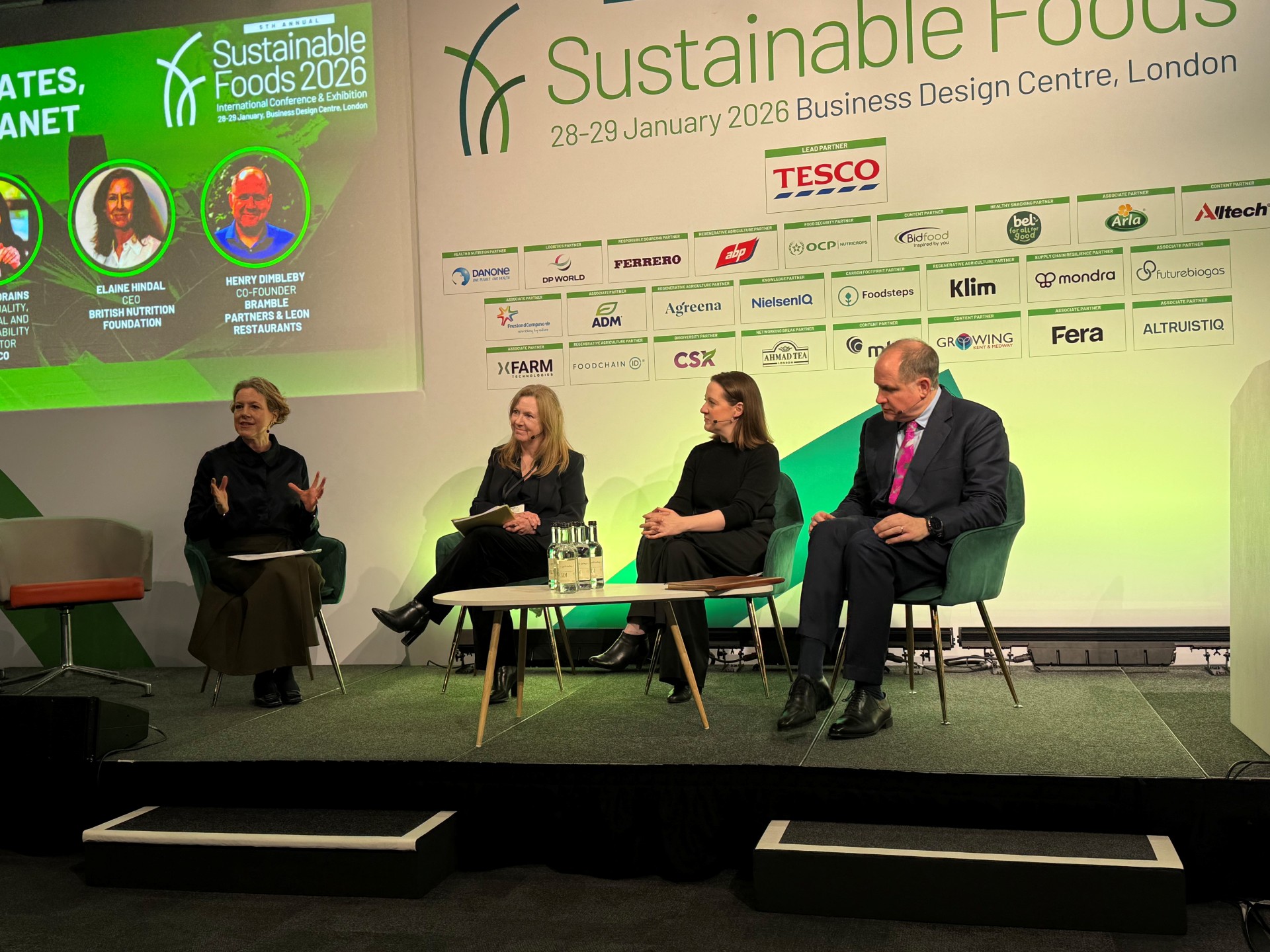
This paradox came through clearly at Sustainable Foods in London on 28–29 January. There was broad agreement on the direction of travel, but far less alignment on what sustainability actually means in practice.
Language matters more than labels
In farming, how we talk about change often matters as much as the change itself.
Terms like sustainable, regenerative or nature-friendly farming are often used interchangeably, yet they can divide opinion and emotion.
Many of our farming peers would simply call it farming - adapting to conditions, managing land and trying to run viable businesses.
What matters isn’t the terminology or label, it’s the outcome.
Put simply, that means producing food with less impact while keeping farms productive and profitable. As one speaker at Sustainable Foods put it, regeneration means resilient farmers, working with nature, in profitable businesses.
Farmers are already in transition
Climate change isn’t theoretical for farmers - it’s happening now. Here in Herefordshire, in the last six months farmers have worked through a prolonged drought followed by the wettest January on record.
Our Pinstone Pulse research shows that many farmers are already adapting by building resilience into their businesses through soil health, cover crops, rotations and system changes – often without recognition for what’s already being done.
Every farm is different. There’s no silver bullet. That’s why one-size-fits-all solutions and universal baselining struggle to work on the ground.
Scaling sustainable farming needs confidence
Conference talk and ambition alone won’t deliver change. Sustainable farming won’t scale without a market, and it won’t work if the financial risk sits disproportionately with farmers.
Sustainability without financial performance is marginal. Farmers need confidence, stability and data they can trust. You can’t expect people to invest when the goalposts keep moving.
Consumers still anchor on the basics
Then there’s the consumer, who adds another layer of complexity. Health and cost of living now sit side by side, yet people are being encouraged to make ‘sustainable food’ choices - a complex ask for an already confused shopper.
The fundamentals haven’t changed. Consumers still want quality, convenience and value.
If we want better outcomes, we must make better choices easier, not harder - through affordable, nutrient-dense food, simpler reformulation, not guilt or restriction.
Resilience matters
Across the food system, resilience is what really matters.
Resilient farms underpin resilient supply chains and food security. And resilience only exists when farmers are recognised and treated as partners, not the problems to be fixed.
From pressure to partnership
This thinking sits at the heart of Pinstone Pulse: From Pressure to Partnership. Our research shows farmers are willing to do more, but they need recognition, stability and trust to move faster.
Sustainability is here. Whether we make progress now depends on better language, better understanding and genuine partnership.

More recent insights

Sustainability: The biggest marketing challenge in agriculture?

How to choose a PR agency (and why most businesses get it wrong)
The importance of media training in food and farming industry

Sign up to our newsletter
Keep your finger on the pulse.