
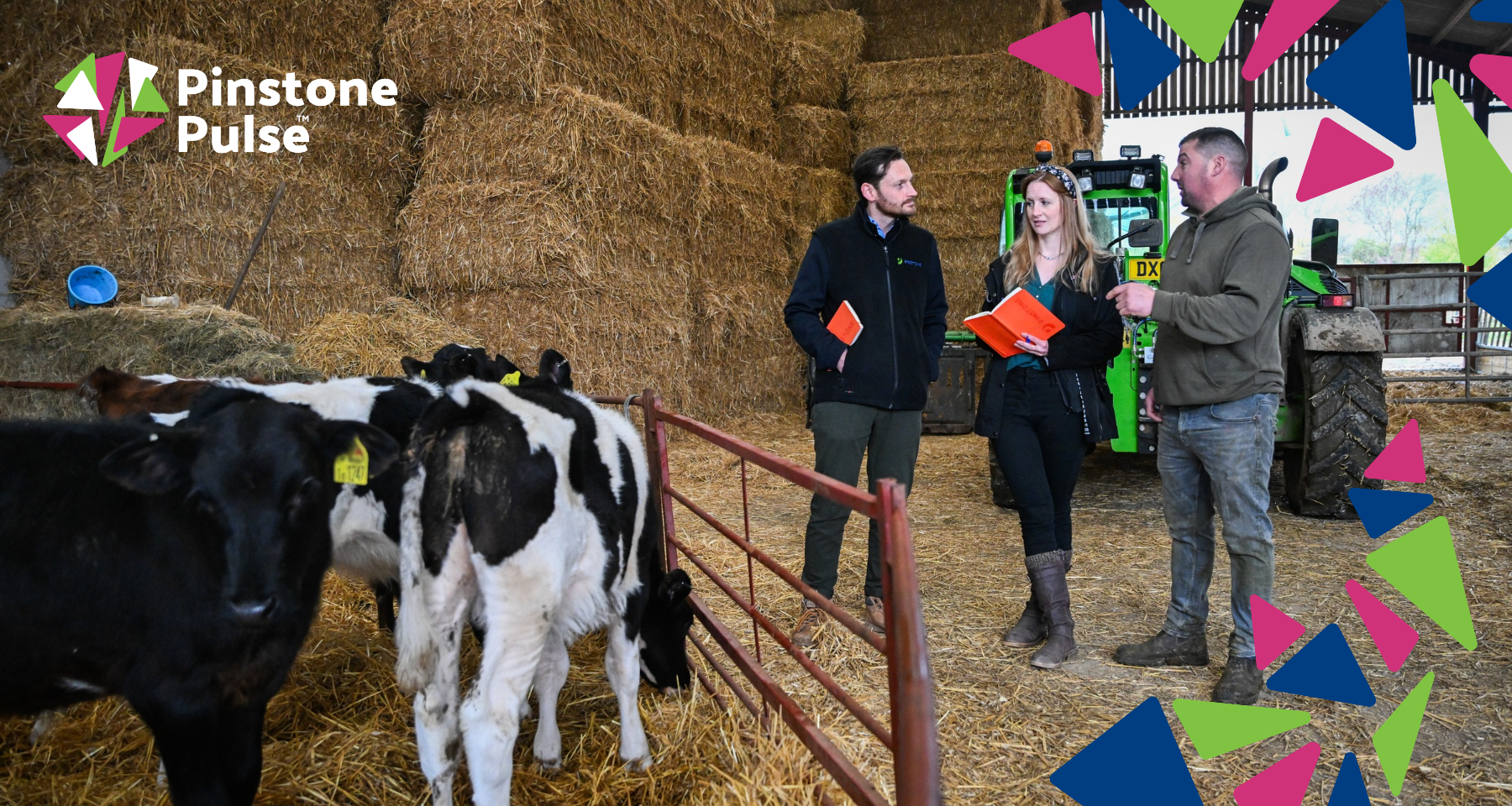
In farming communications, the messenger is just as important as the message
Farmers are increasingly turning to digital channels for information, but traditional relationships remain central to who they trust. Sarah Kidby considers what farmer-focused research tells us about communicating more effectively with the sector.
Having worked as an agricultural journalist and editor for nearly a decade, I’ve seen firsthand the connection farmers have with the publications they trust.
I watched with unease as mainstream magazines closed down in recent years, and readers abandoned printed publications in favour of social media and AI-generated articles.
But I was always struck by how farming audiences differed from the general public.
Farming readers, including young farmers, continued to express enthusiasm for the thud of a 200-page magazine landing on their doormat each month.
This is also demonstrated in recent Pinstone Pulse research, which found that farmers’ most trusted sources of information on sustainability are: other farmers (50%), advisers (54%) and trade media (51%).
It’s particularly interesting at a time when information is everywhere, but our ability to trust in that information is at an all-time low.
However, while it seems that faith in the core farming publications is here to stay, we cannot ignore the importance of digital media, as it’s gaining ground with farmers.
The same research showed that the majority of farmers surveyed are increasingly reliant on Google searches, social media and farming influencers.
There’s a difference between using a platform and trusting it, but these responses suggest that successful comms strategies should strike a balance between traditional and digital media, and use trusted voices to deliver the message.
Confidence lost
Farming is an industry built on relationships and while trust is strong among those close to the farmgate, it drops off rapidly beyond it.
Having had a career in journalism that spanned an interesting decade in farm politics – from Brexit to inheritance tax – I’m not surprised to see that farmers’ trust in the government is low. Just 5% of farmers surveyed said they see the government as a credible and trustworthy source of sustainability advice.
What stands out to me is that trust is not given to those with the most authority or officialdom, but those who best understand their audience.
Farmers are often asked to do the near impossible – adopt sustainable farming methods, produce more food with less land, and diversify to remain profitable. All while facing tighter margins, volatile weather and fewer crop protection products.
If the organisation doing the asking is felt to have a poor understanding of farming, or how far the industry has already come, the message is likely to fall flat.
Whenever I speak to farmers, it’s clear they consider themselves the custodians of the land and wish to leave it in a better state than they found it. There’s a stark difference between this and the impressions often shared by the public and mainstream media.
Unsurprisingly, the Pulse findings also show that farmers feel unappreciated for their efforts to improve sustainability. Those who have made the most effort to change also feel the most pessimistic about our ability to tackle these issues.
For me, this is a significant finding. It suggests that if we do not champion farmers and celebrate the progress they have already made, we risk losing the opportunity to drive change in a sector that was previously engaged.
It’s clear that the starting point of our communications should not be the message. We should first consider who farmers trust and why, what barriers they are facing, and how much has already been achieved.
Farming is an unpredictable industry. Perhaps it’s that volatility that makes the certainty of trusted relationships so important.
Read the full report: Pinstone Pulse: Insight that helps organisations listen deeper
About the author
Sarah Kidby is a technical content manager at Pinstone. Having spent 15 years working as a journalist and editor in the veterinary and agricultural sectors, she combines technical knowledge with a storytelling background. Her approach focuses on creating compelling content that meets client messaging and objectives.
More recent insights
Beyond climate despair – why the way we tell the story matters
The next big issue in food might not be making headlines yet.
Beyond the headlines: turning farming challenges into meaningful communications

Sign up to our newsletter
Keep your finger on the pulse.