
How to reach farmers with messages they might not want to hear
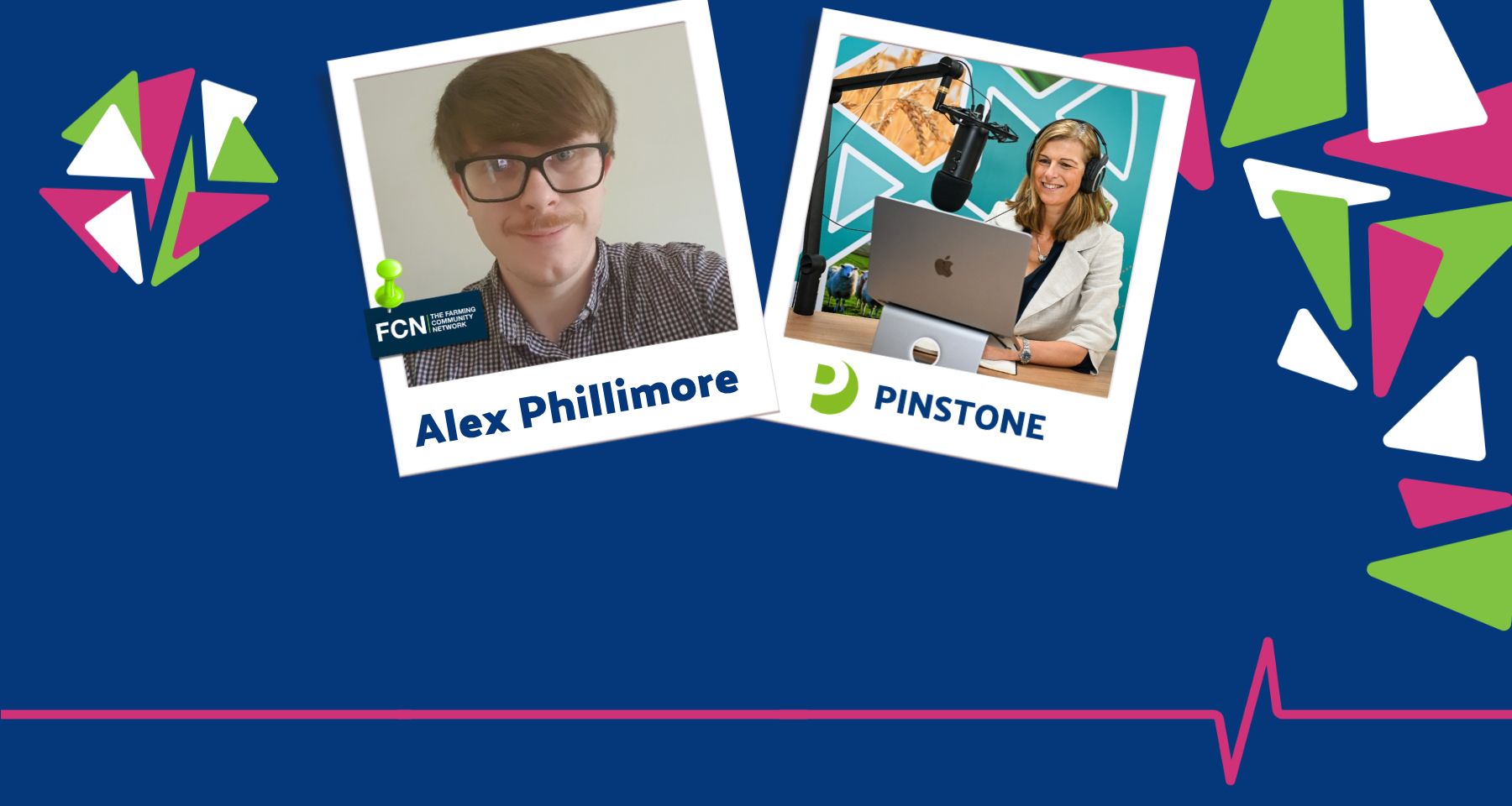
In the latest Pinstone Pulse CommsCast, Pinstone managing director Catherine Linch speaks to Alex Phillimore, head of operations and communications at The Farming Community Network (FCN), about building trust, choosing the right language and breaking down barriers to communication.
Building trust before starting conversations
For FCN, which supports farmers and farming families through personal and business challenges, building trust is essential to encouraging people to seek support.
Many of the charity's volunteers are farmers themselves or have worked in agriculture, giving them a shared understanding of the pressures facing farming families.
Alex explains that this familiarity helps create an environment where farmers feel comfortable discussing difficult subjects.
“To get a farmer to open up to you, you have to build that initial relationship of trust,” says Alex.
He explains that FCN's grass roots agricultural connections mean its volunteers can approach conversations as peers, rather than as outsiders.
“We're not trying to sell people anything. We're not trying to steer them in a particular direction. We're ultimately here to listen,” he adds.
This reflects findings from Pinstone's Pulse report, Sustainability: From Pressure to Partnership, which found that farmers place particular value on advice from other farmers and trusted advisers.
For agricultural communicators, it reinforces why the person delivering a message can be just as important as the message itself.
Choosing words that farmers connect with
Language can determine whether farmers engage with a conversation or avoid it altogether.
Alex explains that certain terms, particularly around mental health, can create barriers for people who may be uncomfortable discussing their personal circumstances.
“I think certain words come with certain implications attached, or can be seen as being loaded,” he says.
Instead, FCN encourages conversations to begin with more familiar, everyday language.
“We don't necessarily have to say something like, 'How is your mental health?' We can say to someone something like, 'How are you feeling today?’”, he says.
This gives farmers an opportunity to share their concerns without feeling pressured to discuss a sensitive subject directly.
The importance of language is also reflected in Pinstone Pulse research, which found that 64% of farmers are put off by too much sustainability jargon.
Alex says the same principle applies to broader subjects such as climate change, where making the issue relevant to individual farms can help people connect with the message.
He says: “I think it's about knowing your audience and it's knowing how to connect with people in a way that resonates with them.”
Taking the message to farmers
Reaching farmers isn't always about encouraging them to seek out information or services. Sometimes, it's about bringing those services to places they already visit.
Alex shares how FCN's partnership with Macmillan Cancer Support is helping make health checks more accessible to farming communities.
Despite Macmillan's established reputation, encouraging farmers to engage with health services was not always straightforward.
“One of the reasons why farmers are less likely to engage is that farmers will rarely talk about their health first. They'll usually talk about the farm first,” explains Alex.
“We’re building the rapport and the connections first, and then we're broaching the cancer subject second.”
By working with FCN and attending agricultural events, including the NSA Sheep Event, the partnership with Macmillan has enabled health checks in familiar settings.
Alex recalls that around nine out of ten farmers approached were willing to take part in a quick check while attending the event.
FCN takes a similar approach through its FarmWell events, where farmers can hear about practical subjects such as rural crime or government grants while building relationships with local volunteers.
For agricultural communicators, the lesson is to consider not only what information is being shared, but where and how audiences are most likely to engage with it.
Why listening matters as much as talking
For Alex, successful communication starts with understanding what farmers actually need.
“I do think listening is an underrated skill,” he says.
“We're not telling farmers this is what they need. We're listening to what are the needs of our community.”
FCN uses these conversations to understand the challenges facing farming families and develop support around those needs.
Alex believes organisations can sometimes focus too heavily on creating information or resources without first establishing whether their audience wants or can access them.
“Don't assume that if you build something, people will come to it,” he says.
He also highlights the importance of working with people who understand the audience, explaining how he relies on farming colleagues to sense-check communications, from language and imagery, through to timing.
“As a communications person, I understand how to communicate something, but I can't pretend I'm a farmer,” he explains.
“Listen to the people around you. Listen to your colleagues, your co-workers, and the people that you work with and listen to your audience. That will help to make sure that you're delivering an effective message.”
Ultimately, reaching farmers with difficult messages requires more than choosing the right words. It means earning trust, understanding their circumstances and making engagement as straightforward as possible.
Listen to the latest episode of the Pinstone Pulse CommsCast to hear more from Catherine and Alex.



More recent insights

Beyond heritage: What Aberdeen-Angus can teach brands about earning farmers’ trust

From journalism to comms and communicating with farmers in a changing world

What makes farmers tune in: trust, attention and the power of podcasting

Sign up to our newsletter
Keep your finger on the pulse.